
The Search for a Complete English Dictionary
The Surgeon of CrowthorneThis thread traces the older dictionary-making efforts and changing ideas about English that made the New English Dictionary seem necessary and possible.
increasing Bearing strength in each event
 decreasing
Bearing strength in each eventdecreasingHard Words for Readers
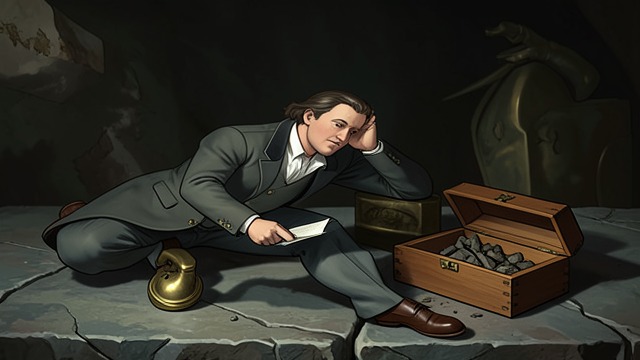
A First Monolingual Dictionary
A limited beginning
Robert Cawdrey published A Table Alphabeticall, a small collection of roughly 2,500 difficult or unfamiliar English words. It was intended to help readers understand words encountered in Scripture, sermons, and other writing, rather than to record the whole vocabulary.
Earlier word-books had often served particular purposes, including helping students with Latin or grouping vocabulary by subject. Cawdrey’s work marked a more direct attempt to explain English words in English, but its deliberately narrow selection left most ordinary language outside its scope.
A question left open
The book’s importance lay partly in what it did not accomplish. Its existence demonstrated that a monolingual English dictionary could be made, while its restrictions made clear how much remained unrecorded.
Later dictionary-makers expanded the enterprise, but for generations many continued to privilege rare, learned, or showy terms. The demand for a dictionary representing the language more fully therefore accumulated over time rather than arriving as a wholly new idea in the nineteenth century.
Johnson’s Monumental Compilation
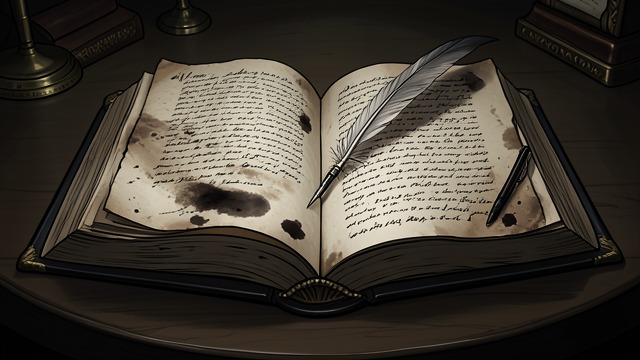
A Dictionary by Reading
The undertaking
Samuel Johnson accepted a booksellers’ commission to make a major English dictionary and organized the work around extensive reading. With a small team of assistants, he collected words and passages from books, then arranged quotations to illustrate meanings and usage.
The resulting A Dictionary of the English Language contained tens of thousands of headwords and a vast body of illustrative evidence. Its definitions could be exacting and memorable, while its quotations showed how much a word’s meaning depended on context.
Achievement and limits
The dictionary became the standard reference for English for roughly a century. Yet it was not a complete record of every word, and Johnson’s own judgments and preferences shaped parts of its presentation.
Its scale established a formidable precedent: a dictionary could become both a work of scholarship and a literary achievement. The later project associated with James Murray would inherit Johnson’s authority while pursuing a still more expansive historical record.
Trench’s Historical Proposal

A Dictionary as Inventory
Deficiencies identified
At a meeting of the Philological Society in the London Library, Richard Chenevix Trench argued that the dictionaries available to readers failed to meet the needs of English. He rejected the idea that a lexicographer should simply select correct words and exclude supposedly improper ones.
Instead, Trench described a dictionary as an inventory and a history of the language. Words of different ages and reputations belonged in the record if they had a recognizable life in English; quotations could document their earliest known written appearances and changing senses.
A collective undertaking
Trench also argued that the task exceeded the capacity of one individual. A large group of volunteers could read literature and contribute the examples needed for a historical dictionary.
The proposal was ambitious and difficult to realize, but it offered the project a practical method as well as a principle. The dictionary would not issue rules from an authority; it would assemble evidence from the uses people had made of English.
The Stalled Society Project
Volunteers and Delays
The plan takes shape
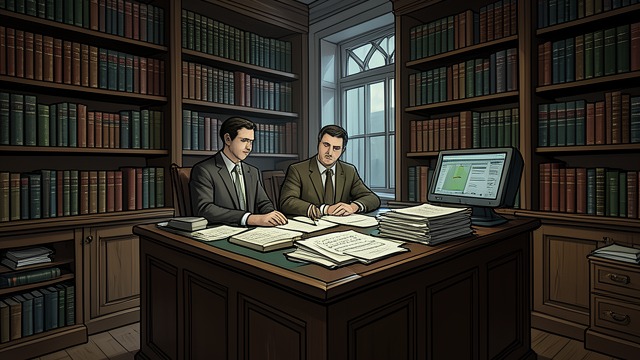
The Philological Society formally adopted the proposal for a New English Dictionary, and volunteers were asked to read books, identify words, and record illustrative passages on paper slips. Herbert Coleridge began as editor and built pigeon-holes to store the expected contributions.
The work quickly exceeded its organizers’ estimates. More slips arrived than the original plans could accommodate, and the anticipated schedule proved unrealistic; the project required an immense amount of sorting, checking, and editorial judgment.
Furnivall’s burden
After Coleridge’s early death, Frederick Furnivall took over the work. He organized assistants to receive and sort contributions, but the effort gradually lost momentum as volunteers returned books and stopped sending slips.
The failure to sustain the early campaign exposed the gap between an inspiring principle and the daily labor needed to carry it out. The dictionary was repeatedly at risk of becoming an aspiration without a workable editorial home.
A Project Finds Its Publisher
From Proposal to Production
Murray’s candidacy
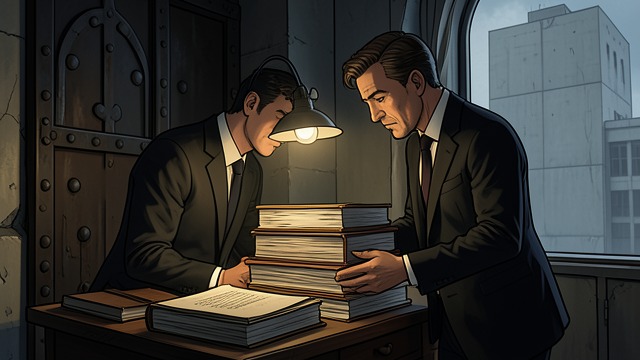
Frederick Furnivall encouraged James Murray to prepare sample pages for the proposed dictionary. Murray’s specimens went before the Oxford University Press delegates, who questioned their coverage and editorial choices before gradually accepting the scale and promise of the work.
The negotiations were prolonged, and the original forecasts remained far too optimistic. Yet the decision to appoint Murray and publish the dictionary gave the undertaking a stable institutional base after years of delay.
A renewed appeal
In 1879 the agreement was formalized, and Murray called for more volunteers to read books and extract quotations. The plan depended on readers across Britain, America, and the colonies, with the editor and his team turning scattered contributions into a coherent historical record.
The new dictionary’s eventual success rested on this combination of editorial leadership, institutional support, and distributed labor. Its beginnings were not a single moment of discovery but a succession of attempts to turn a difficult ideal into an enduring working system.
1604
1746–1755
5 November 1857
1858–1870s
1877–1879
